
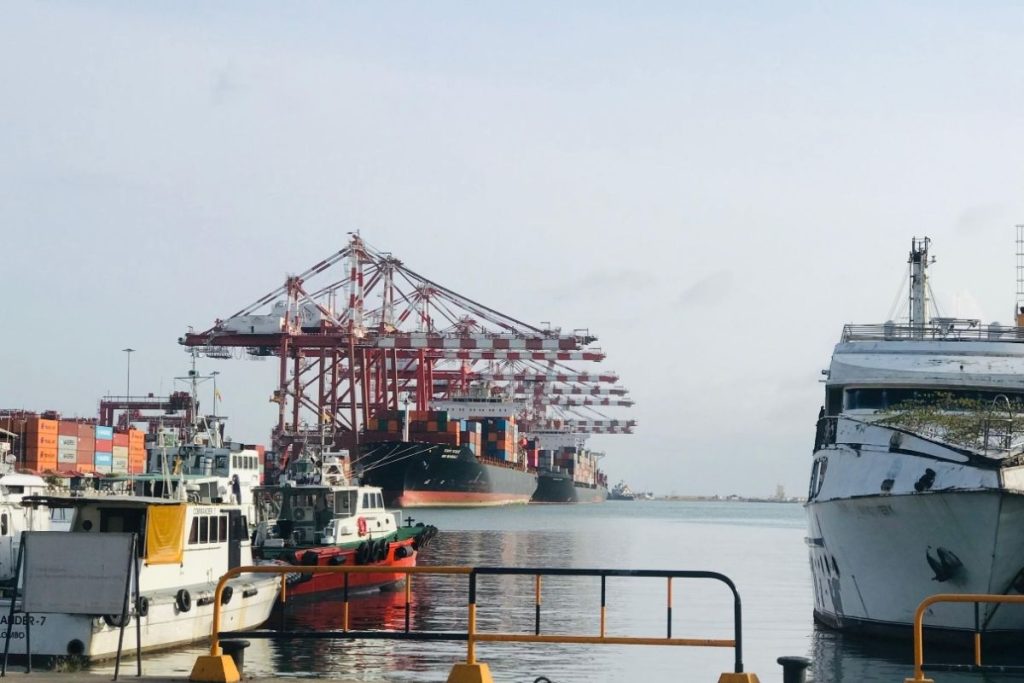
Have you ever wondered where these sea-going giants are parked? Usually we park our vehicles in a parking area, alongside a road, or in a shady place. Do you think these sea-going giants are allowed to park in any place they like? The answer is ‘no.’ That is why the special parking areas for these sea-going giants have been built. We call these parks as ‘ports.’
What is a port?
A port is a parking area for ships and vessels located in a coastal or inland water area for various maritime operations, such as loading and unloading cargo, embarking and disembarking passengers, refueling, or transferring goods from sea to land via trucks and trains. Ports serve as a significant point of interaction between maritime operations and land-based logistics systems, acting as gateways to global trade and economic activities.
Basically, ports come in different types to serve different purposes. Most of the ports are major commercial hubs that handle millions of containers each year. Ports are not only physical locations; they are critical ecosystems that involve multiple stakeholders, including port authorities, shipping lines, customs, freight forwarders, and other government agencies. The smooth operation of a port depends on the coordination of these regulatory bodies, the efficiency of infrastructures, and the use of modern technologies that enhance the operations and security.
The Importance of a Port
Ports are more than just docking points for ships; they are strategic assets that drive a country’s economy, connect the global trade networks, and support industries in the maritime field. Thus, they are important in economic activities and growth.
1. Facilitating International Trade
Ports are the key points to international trade and handle more than 80% of global trade. Ports serve as transit points for goods moving between countries. Electronics from East Asia, oil from the Middle East, and food products from South America are made to reach their destination through ports. A well-operated port system enables smooth trade flow, reducing delays and minimizing transportation costs, including for both importers and exporters.
2. Generating Job Opportunities
A single port can generate thousands of jobs, both internally and externally. In ports, employment opportunities arise in areas such as port management and administration, cargo handling and terminal operations, shipping and freight forwarding, customs and border control, warehousing and inland transportation, and more. A port itself supports industries such as logistics, insurance, construction, and retail, which also benefit from port operation activities.
3. Supporting the Supply Chain
Ports are a significant link in the global supply chain. They act as major logistics hubs where goods are transferred between sea and land. Efficient ports ensure that cargo reaches its destination on time, which is crucial for industries relying on just-in-time delivery models. Any delays or inefficiencies at a port break the smooth flow of the entire supply chain, affecting businesses, retailers, and consumers.
4. Economic Growth
Ports act as a significant contributor to a nation’s economic development. By improving connectivity and trade capacity, they attract foreign direct investment, boost industrial production, and support supply chains. Port cities often grow into major economic centers due to the commercial opportunities that ports generate. Countries’ developments and enhanced port infrastructure are often a key strategy for economic modernization and integration into global markets.
5. Enable Regional and Global Connectivity
Ports that are strategically located act as regional hubs and international connectivity points. Transshipment ports, such as the Port of Colombo in Sri Lanka, serve as redistribution points where cargo is transferred between vessels. This enhances the global shipping network’s efficiency and strengthens a country’s relevance in the international maritime field.
Ports are the heart of the maritime world. The importance of ports extends to influencing a vast area of a nation. As the maritime industry continues to evolve, the development and modernization of ports will remain a priority for any nation.
Key Features & Functions of a Port
A port is more than just a place where ships dock. It’s a busy and well-organized area with many interconnected parts that work together to handle cargo, ships, and people efficiently. One of the most important features of a port is the berth or quay, where ships are tied up when they arrive at the port. To move cargo, ports are equipped with cranes, forklifts, and conveyor belts. Storage areas are also another key function of a port. Warehouses, open yards, or special storage areas are available at a port to store cargo. A well-organized port is equipped with road and railway connections to move goods quickly.
Ports often use navigation and safety systems to make sure ships arrive and leave safely. This includes lighthouses, buoys, and radar. Special teams like pilots and tugboats are available to assist ships into the port. A port has many key features and functions that work together to support the movement of goods and ships. The better the infrastructure, the faster and more efficient the port becomes.
In conclusion, a port is a vital link between sea and land, playing a major role in enabling global trade and supporting the economic growth of a country. They also improve the connections between regions and the world. With features like docking areas, cranes, storage spaces, and transport links working together to keep port operations smooth and efficient.