We use vehicles for our day-to-day transportation. These vehicles we use—cars, buses, motorbikes, or any land-accessible vehicles—are driven on a road created by humans. Likewise, airplanes that transport people and cargo do not fly everywhere just because there’s plenty of space in the sky. This concept is common to the shipping industry.
Ships do not sail everywhere just because there’s space in the sea. Instead there are lanes in the sea. These lanes are called “shipping routes” in the industry. These routes are a combination of both natural and artificial attributions of the sea.
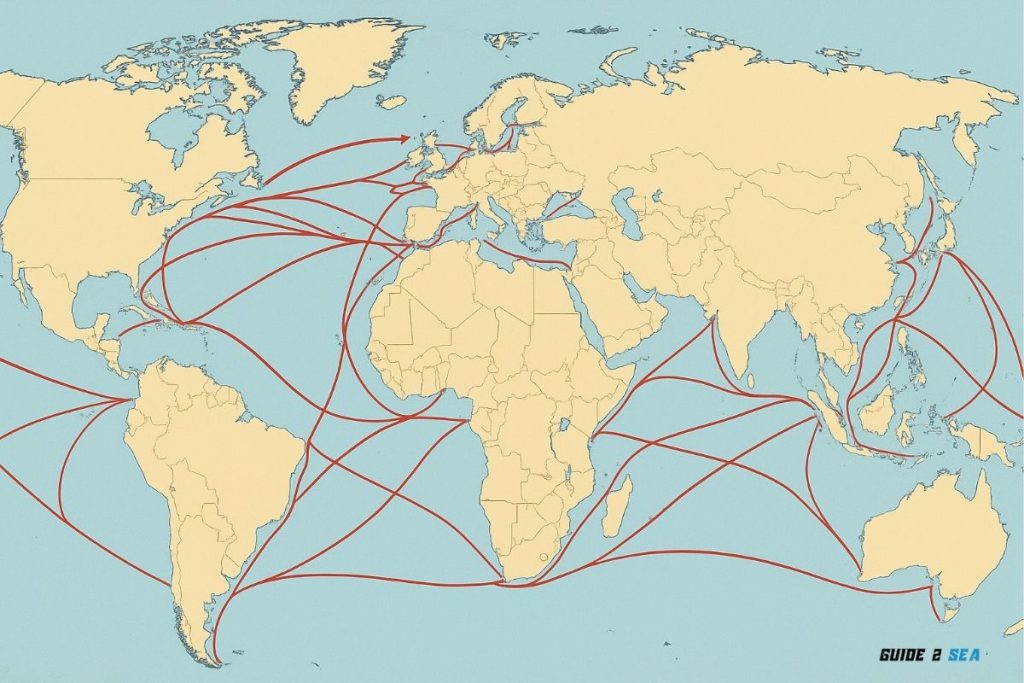
Most of the major shipping routes are natural pathways with geographical features. These shipping routes are predefined with the shortest and safest pathway, considering natural effects such as wind, currents, etc.
Based on the trade demand and technological advancement, shipping routes have been implemented. Man-made canals like Panama and Suez have shortened the distance that a ship should sail. These routes have boosted the efficiency and effectiveness of the shipping.
Major Shipping Routes
Today, over 90% of the world’s transportation lies through the shipping routes. When the ocean separates the countries, shipping routes have become the major line to connect the world together.
Let’s have a closer look at the main shipping routes.
1. Panama Canal (Atlantic – Pacific)
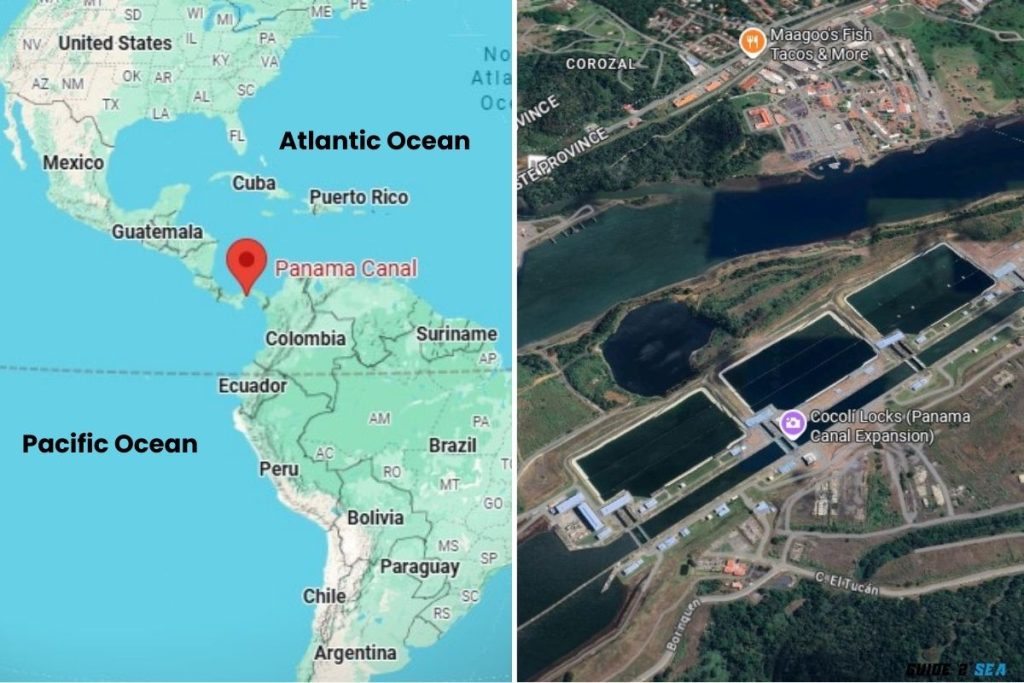
The Panama Canal is one of the man-made artificial sea routes in the world. First the canal was started to be built by France in 1881 and stopped in 1889 due to the challenges that came up. After that, the United States (US) takes the lead of the canal project in 1904.
In 1914 the canal was opened, and the surroundings of the Panama Canal Zone were governed by the US. After a certain period, in 1999, the Panama government takes the authority of the Panama Canal. By now, the Panama Canal is operated and owned by the Panama Canal Authority.
The canal is 82 kilometers/51 miles long and has become the shortest sea route between the Pacific and Atlantic Oceans. This canal is built with locks. There are 3 lanes of locks per transit (3 locks up & 3 locks down) due to the geographical issues. The width of the primary locks of the canal is 33.5 m (110 ft). Ships that could pass through these locks are called ‘Panamax Ships.’ With the building of the Panama Canal, up to 12,000-15,000 ships cross annually, and around 36-38 transits can be handled under the normal condition of the canal.
2. Suez Canal (Asia – Europe)
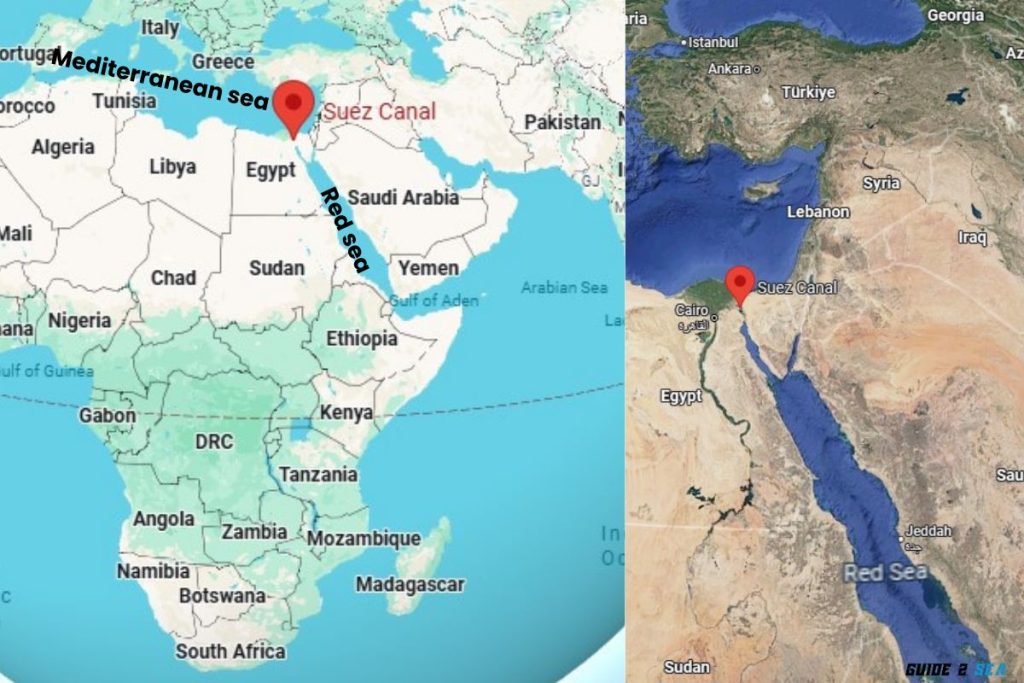
The Suez Canal is also a man-made artificial sea route among the other shipping routes in the world. The canal was started to be built between 1859 and 1869, and in 1869 the canal was officially opened for trade. The canal is 193.30 kilometers (120.11 miles) long and located in Egypt. With the building of the Suez Canal, it has created a direct trade route between Europe and Asia by connecting the Mediterranean and Red seas.
The Suez Canal is one of the busiest trade routes between Europe and Asian countries. Because of that, the canal’s contribution to maritime logistics is remarkable. Approximately around 12% of global trade, 30% of container traffic, 7%-8% of the world’s oil, and 8% of LNG (liquefied natural gas) are carried through the Suez Canal. Unlike the Panama Canal, the Suez Canal does not have locks.
Due to the Ukraine-Russia war, ships have avoided passing Suez based on the safety issues. Instead, ships sail through the Cape of Good Hope in South Africa, which is a longer route to reach Europe.
3. The Strait of Malacca (Indian Ocean-Pacific Ocean)
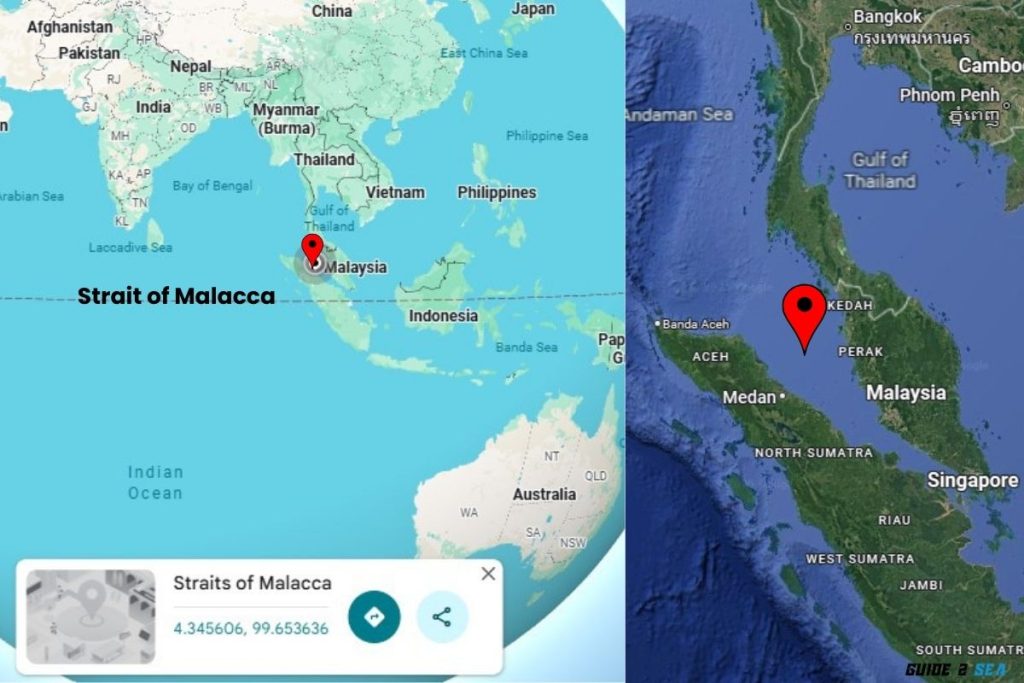
The Strait of Malacca is a significant sea route between the seas of Malaysia and Sumatra. This runs through the Pacific Ocean to the Indian Ocean, making a major part of the Maritime Silk Route, starting from the Chinese Coast and running through the Indian Ocean, Red Sea, Suez Canal, and Mediterranean Sea and connecting with the European ports.
The Strait of Malacca is around 900 kilometers long and has a width of 38 kilometers to 250 kilometers. Approximately over 95,000 vessels pass each year, making the channel one of the busiest trade routes in the world. The largest ship that can pass through the channel is called Malaccamax. The depth of this channel extends from 25 meters to 200 meters.
The channel connects major economic countries like Japan, China, Singapore, and India, and other countries like Thailand, Indonesia, Malaysia, the Philippines, Vietnam, Taiwan, South Korea, Sri Lanka, and other feeder ports. Around 25% of world trade is transported through the Strait of Malacca.
4. The Trans-Pacific Route (Asia–America)
The Trans-Pacific trade route connects Asia and America in the world trade of cargo. According to the reports of UNCTAD 2023, over 60% of global containers are being passed between Asia and America. From electronics and machinery to textiles and automobile parts, all are transported through this route.
The route has also become the source of cultural exchange between Asian and American countries. This trans-Pacific route can mainly be divided into 3 routes based on the trade.
- Northern Route: This route connects Asian countries like China, South Korea, and Japan to the U.S. and the west coast of Canada. This includes West Coast ports like Los Angeles, Oakland, Seattle, and Vancouver. This route is mainly used to transport containerized goods, automobile parts, electronics, and machinery parts.
- Central-Pacific Route: Through the Central-Pacific Routes, it connects the Southeast Asian ports (i.e., Singapore) with California and Mexico. Cargo like textiles, furniture, agricultural products like fruits and grain, and electronics are transported.
- Southern Route: This trans-Pacific trade route extends through the Panama Canal. South American ports and East Asian ports are connected together with this route.
5. The Trans-Atlantic Route (Europe–America)
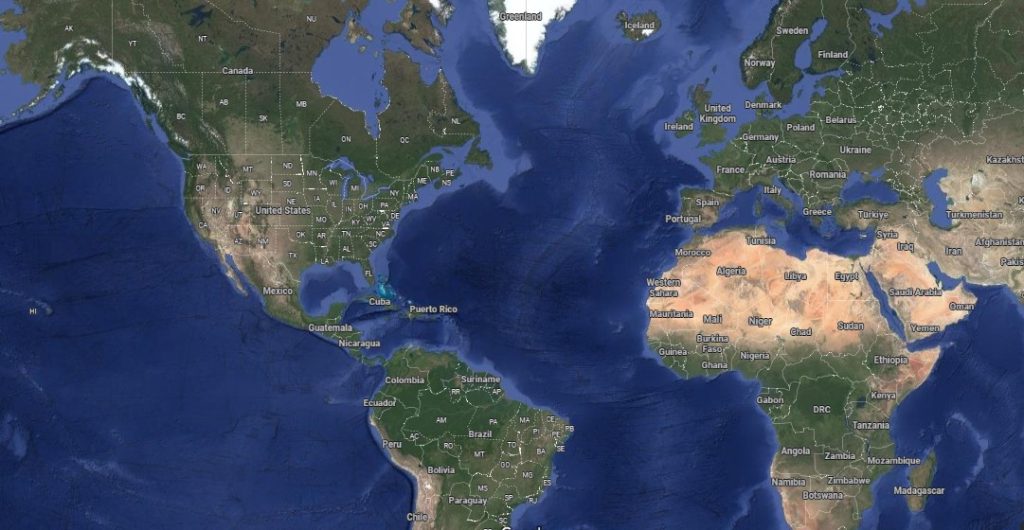
The Transatlantic Route is the path to connect America, mainly the U.S. and Canada, with Europe through the Atlantic Ocean. Goods like electronics, machinery, automobiles, energy resources, and chemicals, as well as passengers, are transported through the transatlantic route.
Major ports in North America, such as New York, Miami, and Norfolk, are connected with major ports in Europe like Rotterdam, Hamburg, Liverpool, Southampton, etc.
6. Cape of Good Hope Route (Africa’s southern tip)
The Cape of Good Hope shipping route is also known as the Cape Route. The Cape Route has a remarkable history in the shipping world. This route has been discovered by Vasco da Gama to reach India from Europe. The route extends from the South African coast.
After the building of the Suez Canal, it has reduced the distance to Europe. But, due to the ongoing Russian-Ukrainian war and terrorist attacks, ships use the Cape route to sail to Europe.
Final Thought
Understanding and studying the shipping routes of the world helps to get a vivid knowledge about how the global trade works through the countries and seas. Every day, tons of goods are transported via these channels to the various destinations of the world. Simply, the shipping routes have become the major link between the countries that have been separated by seas.