
In the world of global trade and transportation, ships are the silent giants that keep the economies moving. Yet behind every voyage there is a team of professionals who are dedicated to surviving while at sea. These individuals are called “seafarers” or “seamen.” Seafarers are the people who operate, maintain, and support the vessels/ships across all types of maritime operations to ensure that ships sail safely and efficiently, complying with international standards.
Definition of a Seafarer
A seafarer is anyone who is employed, engaged, or works in any capacity on board a ship involved in commercial or maritime operations. This includes individual responsibilities for navigation, engineering, maintenance, and other onboard services that support the smooth functioning and safety of the vessel.
According to the Maritime Labor Convention (MLC)—2006, a seafarer is defined as,
“Any person who is employed or engaged or works in any capacity on board a ship to which this Convention applies.”
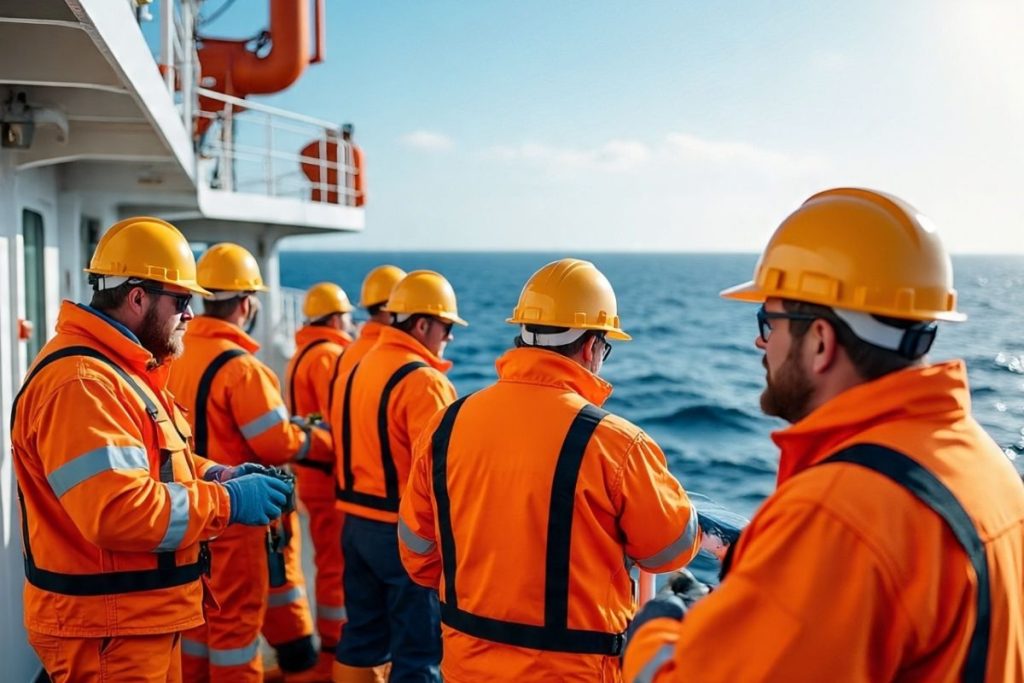
This definition is applied to the wide range of positions on board a ship, from captain to chief engineer to cook, steward, and even medical and hospitality staff on cruise ships.
Seafarer vs Seaman
The words ‘seafarer’ and ‘seaman’ are often used interchangeably in the industry. Both terms refer to those who spend their career life at sea with different ranks in the ships.
However, the word “seafarer” is the common, professional, and legal terminology that aligns with international maritime standards, which highlights and emphasizes the respect and professionalism in the industry regardless of gender.
Categories of Seafarers
Seafarers are broadly categorized based on their roles and qualifications. The two main categories are,
1. Licensed Seafarers
Licensed seafarers are also known as officers who have received formal education and training and hold advanced certificates issued by maritime authorities. These certificates are issued in accordance with the STCW convention (Standards for Training Certification and Watchkeeping). Licensed seafarers typically occupy leadership and technical positions onboard the vessel.
2. Unlicensed Seafarers
Unlicensed seafarers, who are also known as ratings, are crew members who do not hold officer-level certificates but are essential to the daily operations by assisting the officers of the vessel. They usually undergo basic safety training and job-specific training, often certified by the maritime training institutes that are under STCW requirements for ratings. Other unlicensed crews may include a steward, cook, and messman, who are part of the catering department of a vessel.
Read : Beginner’s Guide to Marine Engineering
Duties of Seafarers
The vessel consists of three main departments: the Deck Department, the Engine Department, and the Catering Department. Behind the smooth operation of every department of a ship lies the hard work and dedication of professionals known as seafarers. They contribute to the overall safety, performance, and efficiency of the vessel.
1. Deck Department
Among the key departments of the vessel, the deck department plays a vital role. It is responsible for the safe navigation, cargo operations, mooring, and overall safety management of the vessel. The deck crew, from master to ordinary seaman (OS), ensures that the ship reaches its destination efficiently. Without the skilled work of deck department personnel, maritime operations would be impossible. Their collective efforts uphold international standards, protect life at sea, and keep the global trade moving.
2. Engine Department
The crew in the engine department is responsible for operating, monitoring, and maintaining the ship’s propulsion systems, generators, auxiliary machinery, and electrical systems. Their work ensures the vessels have the power and systems needed to operate at sea. From chief officer to fitter, oiler, and motorman, it ensures the vessel’s electrical systems are functioning efficiently.
3. Catering Department
While navigation and engineering keep the vessel running, the catering department is essential for maintaining the health and morale of the crew. This team is responsible for preparing meals, maintaining cleanliness, and ensuring proper hygiene standards are met onboard. The chief cook and the messman are the key roles in the catering department, which plans menus, prepares meals, manages food stores, and ensures nutritional and hygienic standards for the crew and officer on board.
Final Thought
Although the departments have distinct responsibilities, the success of any voyage depends on the coordination and teamwork of the seafarers. No role is less important than the other. Every seafarer, regardless of rank or department, plays a vital role in ensuring that ships are sailing safely across the oceans. Thus, understanding the duties of the seafarers across the various departments helps to get the complexity of running a ship. Their contribution not only keeps the vessel operational but also supports the global supply chain that connects economies and communities around the world.