We people often rent apartments, cars, or even tools when we need them for a certain period. It is a simple concept. We use something for a while, pay for it, and return it when we are done. But have you ever imagined that ships, too, can be “rented”?
Yes, in the shipping, there’s a similar system. Instead of calling it renting or hiring, we use the term “chartering.” Vessel chartering is a common practice in global shipping. It plays a major role in moving cargo efficiently around the world.
In this article, let’s explore what ship chartering really means, the different types, the key players involved, and why it matters so much to the global economy.
Definition of Ship Chartering
Let’s start with the basics. “What exactly is ship chartering?”
In simple terms, ship chartering is the process of hiring a vessel to carry goods from one port to another. It involves a formal agreement between two parties. The shipowner is the one who provides the vessel, and the charterer is the one who needs to move cargo.
Think of it this way: A company wants to transport a large quantity of goods but doesn’t own a ship. They can simply “charter” a ship.
Ship chartering is a major part of global trade. The main goal of ship chartering is to ensure that cargo is transported efficiently, safely, and at a reasonable cost. Both parties agree on the terms through a legal contract called a charter party agreement. This document includes details like freight rate, duration, responsibilities, and other conditions related to the voyage.
In essence, ship chartering is like renting a ship for a specific job. This system gives flexibility to both sides. The shipowner earns income, and the charterer moves their cargo efficiently. Chartering also helps balance the shipping market. When trade increases, people hire more vessels.
Types of Chartering
There are several ways to charter a ship. Each serves a different purpose in the shipping industry. Let’s look at each type of chartering in simple terms.
1. Voyage Charter
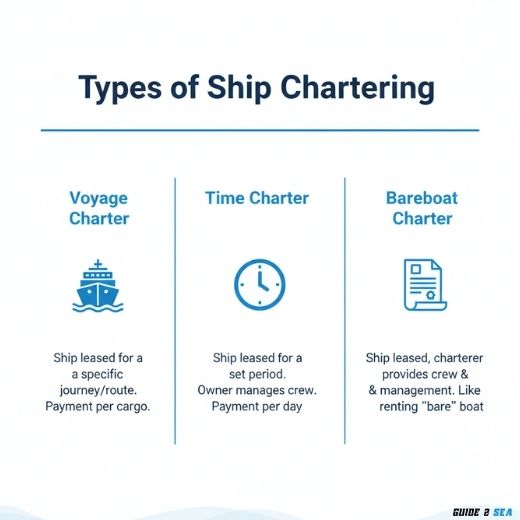
This is the most common type of ship chartering. You can think of this as booking a taxi for a trip. Once the journey ends, the deal ends too.
In a voyage charter, the shipowner agrees to carry goods from one port to another port. The one who hires the ship pays for that voyage.
In this case, the shipowner is responsible for operating the vessel, providing the crew, and covering most expenses such as fuel, maintenance, and insurance. The charterer only needs to provide the cargo and decide where it should be delivered. This type of charter is very common for bulk cargoes like coal, grain, or crude oil.
2. Time Charter
This is like renting a car for a few months. You can decide where to go. But still you don’t own the car.
In a time charter it allows you to hire the vessel for a specific period of time. It could be weeks, months, or even years. During this time, the charterer controls where the ship goes and what cargo it carries.
The shipowner still manages the crew, technical operations, and maintenance. But the charterer (one who hired the ship) pays for fuel, port charges, and other voyage-related costs. This type of charter gives more flexibility. Because the charterer can plan multiple voyages within the agreed time.
3. Bareboat Charter (Demise Charter)
This process is similar to leasing a house. You can manage everything in the house during the lease period.
A bareboat charter is also known as a demise charter. In the bareboat charter, the ship is handed over to the charterer without crew, stores, or insurance. The charterer takes full control and responsibility for the vessel, including crewing, operation, and maintenance.
This is almost like leasing a ship. The charterer becomes the temporary owner during the contract period. Bareboat charters often last for several years. Some charterers even use it to test operations before buying a ship.
These types of chartering agreements show how the shipping industry works. Whether it is for one voyage or several years, there’s always a charter type to match every business need.
Parties Involved in Ship Chartering
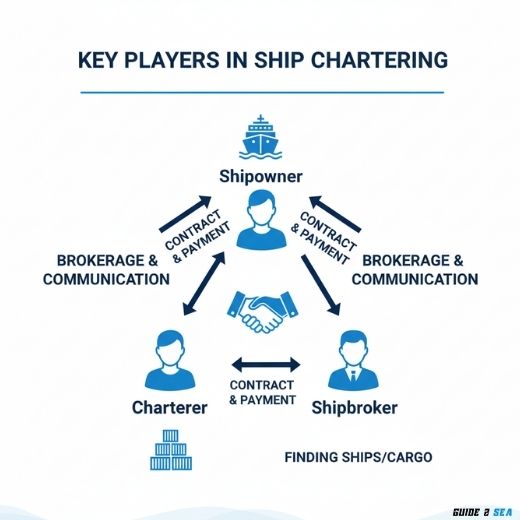
Every chartering deal involves key players. Each one has specific responsibilities to ensure cargo moves efficiently from one port to another. Together they make the process run smoothly.
a. Shipowner
The shipowner is a person or a company that owns the vessel. Their main goal is to earn income by leasing out their ship to carry cargo. Shipowners are responsible for maintaining the vessel, hiring the crew, and ensuring compliance with safety and environmental laws.
Shipowners can range from large shipping corporations to small companies or individuals.
b. Charterer
The charterer is a person or a company that hires the vessel or a space of it. They can be cargo owners, traders, or freight forwarders arranging shipments on behalf of clients.
The charterer decides what to transport, where it needs to go, and which type of charter works best. They are the ones who pay for the service and ensure that the cargo is ready for loading.
c. Shipbroker
A shipbroker acts as a middleman between shipowners and charterers. Their job is to negotiate terms, find suitable vessels or cargo, and ensure both sides agree on fair conditions.
Shipbrokers are highly skilled professionals in the shipping market. They know which vessels are available and what freight rates are trending. Once they match a ship with a charterer’s needs, they help prepare the charter party agreement.
In return, brokers earn a commission. Usually it is a percentage of the freight or hire fee.
Together, these parties create a coordinated system. It keeps ships and cargo moving worldwide. Without their cooperation, global trade would face serious disruptions.
Chartering vs. Ship Brokering
Many newcomers to the maritime world often confuse ship chartering with ship brokering. But they are two different activities that work closely together.
Let’s clear up the difference.
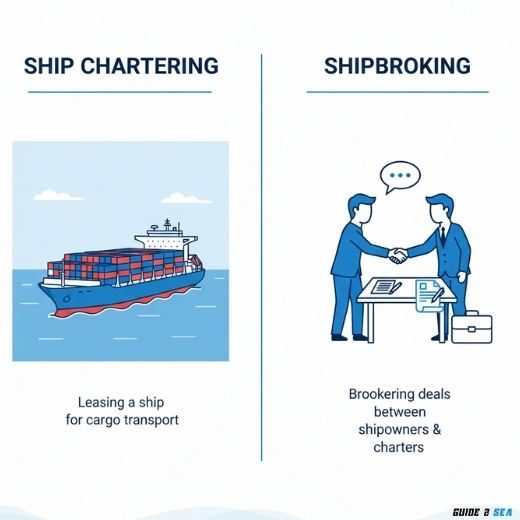
Ship chartering is the process of hiring or leasing a ship. It’s the business deal. They negotiate between the shipowner and the charterer about using a vessel.
In contrast, ship brokering is a service that supports this process. A shipbroker does not own a vessel or cargo. Instead, they act as a mediator between the shipowner and the charterer.
Both are important to the shipping industry. Without charterers, there would be no ships to hire. Without brokers, deals would take a longer time and might not be as profitable.
Why Ship Chartering Matters
Ship chartering seems like a behind-the-scenes activity. But it plays a massive role in how the global trade functions. Over 90% of global trade depends on shipping, and most of those voyages happen through chartered vessels.
Let’s see why ship chartering matters so much.
Keeps Global Trade Moving
From crude oil and iron ore to cars and electronics, goods are transported by ships. Chartering ensures that goods reach their destinations safely and on time. This connects exporters and importers across the world and keeps supply chains running smoothly.
Flexibility for Businesses
Not every company can afford to own ships. Chartering allows businesses to move goods only when needed. It helps to save millions in costs of ownership and maintaining a ship. This gives them the flexibility to respond to the changing market conditions.
Maximize Profit
Shipowners can earn benefits by chartering ships. It helps them to ensure steady income and avoid keeping ships idle. In a highly competitive industry, this helps them to maintain profitability.
Reduces Risk and Responsibility
The charterer only hires ships temporarily. So, they don’t have to worry about long-term operational risks like vessel maintenance or crew management. It’s a cost-effective solution for short-term transport needs.
Adapts to Changing Markets
Chartering contracts can be short-term or long-term. Because of that, companies can adapt quickly to fluctuations in demand, fuel prices, and trade routes. This adaptability keeps the industry flexible even during economic uncertainty.
In short, ship chartering isn’t just about moving cargo. It is about keeping the world connected. Every container, tanker, or bulk carrier you see on the ocean represents a charter agreement in action.
Final Thought
So, what exactly is ship chartering? It’s more than just renting a ship. Through the chartering of a ship, cargo moves, ports stay busy, and economies stay connected.
From voyage and time charters to bareboat arrangements, every form of chartering provides a flexibility for both shipowners and cargo owners. Behind every successful charter, there is teamwork among shipowners, charterers, and shipbrokers.
As shipping continues to modernize with digital platforms, eco-friendly vessels, and smarter contracts, ship chartering will only grow to be more efficient and transparent. It will remain one of the most crucial elements of global trade.