
Imagine a busy port in the 1950s. Workers are busy lifting boxes, barrels, and bags by hand. Ships wait for days, sometimes weeks, just to load or unload cargo. Damages, lost goods, and shipment delays are common. Trade is slow, expensive, and stressful.
Now picture the same port today. Thousands of colorful containers are stacked neatly on massive ships. Giant cranes move containers from ship to shore in minutes. Trucks and trains are ready to carry them across countries without ever opening the boxes.
What is this difference? It is the containerization.
In this article, let’s see what containerization is, how it started, and how it reshaped the shipping world.
What Is Containerization?
In simple words, containerization is the process of packing goods into large, standardized metal boxes. These boxes are containers that can move easily between ships, trucks, and trains without unpacking or repacking.
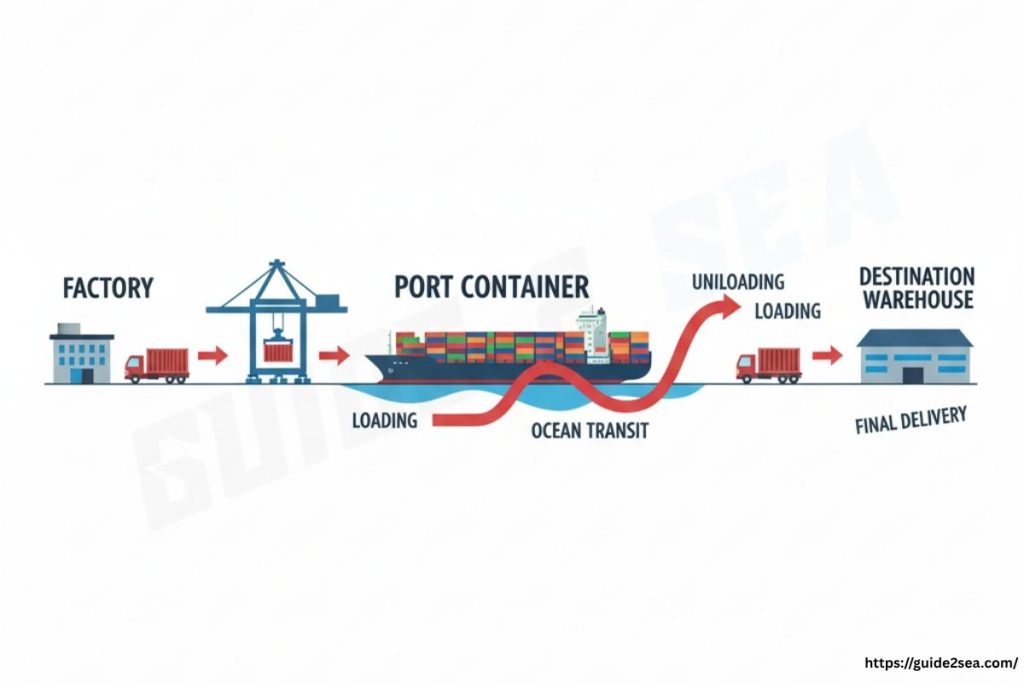
These containers come in standard sizes, such as 20-foot (TEU) and 40-foot (FEU) units. This standardization allows containers to fit perfectly on ships, trailers, or railcars anywhere in the world.
Containers are durable, weatherproof, and secure. Once sealed, a container stays closed until it reaches the destination. This prevents theft, damage, or delays caused by repacking. As containers can move seamlessly across different transport modes, containerization enables intermodal transport.
Essentially, containerization made cargo handling faster, safer, and more efficient. Instead of treating every package as an individual unit, the world now moves trade in millions of standardized boxes.
Evolution of Containerization
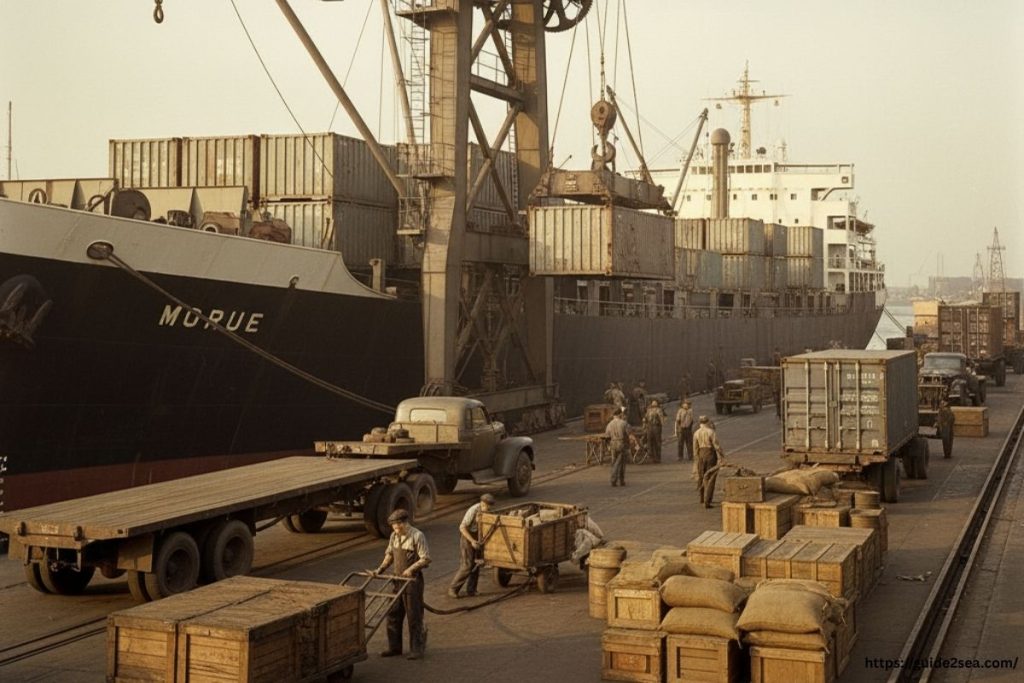
Before containerization, shipping relied on break-bulk cargo. Goods were loaded and unloaded manually, piece by piece. It was time-consuming, inefficient, and expensive. Ships often had to spend more time at the port than at sea.
The turning point came in 1956. American trucking businessman Malcolm McLean came up with a revolutionary idea. Instead of loading goods individually, he brought the concept of putting goods into a standardized box. This innovation is the foundation of containerization.
Because of this simple idea, McLean became the father of containerization. His first container ship, Ideal X, carried 58 containers from Newark, New Jersey, to Houston, Texas. This simple test voyage started a revolution in shipping and global trade.
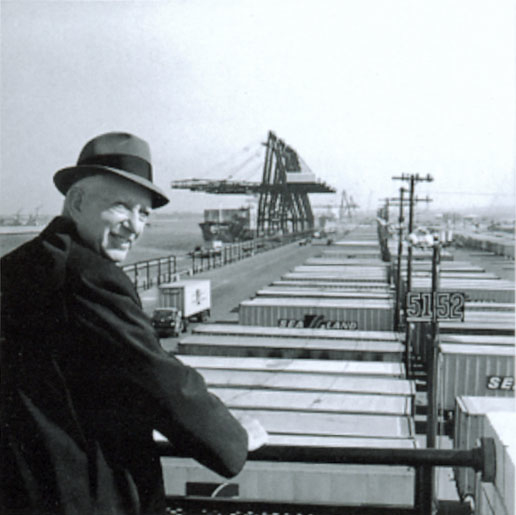
During the 1960s, containerization spread rapidly across the U.S. and Europe. In 1968, the International Organization for Standardization (ISO) introduced standard container sizes. These standards made it possible for containers to fit perfectly on any truck, ship, or train anywhere in the world. Ports began adapting to handle these new containers with cranes and specialized terminals.
By the 1980s, containerization had taken over global shipping. Today, over 90% of the world’s non-bulk cargo moves by containers.
How Containerization Affected the World
Containerization didn’t just change how goods move. It reshaped the entire global logistics system, from port layouts to ship design, from cargo-handling equipment to inland transport.
Port modernization
Before the container era, ports were designed for break-bulk operations with warehouses, manual labor zones, and cranes suited for irregular cargo. When containers arrived, everything had to change.
Redesigned ports included container yards, gantry cranes for container loading and unloading, container terminals, and deep-water berths to handle massive container ships.
Later, automation became more common. Ports like Rotterdam and Singapore are now using driverless vehicles and robotic cranes for 24-hour operations.
Redesign of Ships
With containerization, traditional cargo ships were replaced with container ships. Early ships could carry only a few containers. But today’s shipping giants like MSC, Maersk, and Evergreen can carry more than 24,000 TEUs. These ships feature flat decks and open holds for easy container stacking, powerful cranes for loading and unloading, and advanced stability systems to balance weight and prevent accidents. The redesign of ships has reduced voyage time and has increased the economies of scale of global trade.
Invention of New Port Equipment
The rise of containerization created demand for specialized port equipment and technology that didn’t exist before. Some of the innovations include cranes, reach stackers, straddle carriers, trucks, chassis, and container scanners. Today’s ports look more like high-tech logistics hubs than old cargo docks. Sensors, cameras, and algorithms keep everything running smoothly.
Revolution of Inland Transport
Containerization did not stop at the ports. It revolutionized inland transport as well. Trucking companies adopted container chassis to carry TEUs and FEUs. This intermodal transport system allows a single container to travel by ship, train, and truck without unpacking or repacking. It saves time, reduces damage and theft, and lowers shipping costs.
Boost global trade.
Containerization turned shipping into a faster, cheaper, and safer transport method in global trade. Factories in Asia can ship products to Europe and North America quickly and reliably, while farmers can export perishable goods while they are still fresh. In short, containerization created a world where trade moves fluidly across countries, connecting economies like never before.
Social and Urban Impact
The social and urban effects of containerization have also been significant. Old dock areas were redeveloped into modern container terminals, while some ports transformed into business districts or tourist areas.
Jobs changed as well. Manual labor decreased, and new opportunities emerged in logistics, technology, and port management. Educational programs began training people specifically for careers in modern shipping and supply chain management. Containerization shaped not just the economy but also the way cities and communities developed around ports.
Environmental Effects
The containerization also affected the environment. Compared to older methods, containerization improved fuel efficiency and reduced emissions and energy use. In response, many ports adapted to greener technologies. These efforts aim to make global trade more sustainable while maintaining its efficiency.
Overall, containerization has reshaped the world. It changed ports, ships, transportation systems, and cities. It connected economies, boosted global trade, and influenced the way we live and work.
Advantages of Containerization
The benefits of containerization are so massive. Because it didn’t just change shipping. It transformed the entire global economy. Here is how it makes trade faster, safer, and more efficient.
- Speed and efficiency: Before containerization, cargo handling was slow. Now, cranes can load or unload containers in minutes. This speed means shorter port stays and quicker turnaround times.
- Lower Shipping Costs: Standardization saves both time and money. Containers reduce labor costs, minimize delays, and increase cargo volume per trip. The cost to ship one ton of goods has dropped by more than 90% since the 1950s.
- Safer Cargo Handling: Containers protect cargo from theft, damage, and bad weather. Once sealed, the goods inside remain untouched until they reach their destination. This security increases customer confidence and reduces insurance costs.
- Global Connectivity: Containerization connects ports, countries, and businesses. It enables smooth transfers between ships, trains, and trucks. A product made in one country can reach any part of the world efficiently and affordably.
- Environmental Efficiency: Although shipping still impacts the environment, container ships move large amounts of goods using less fuel per ton compared to trucks or planes. This makes containerization one of the most energy-efficient transport systems.
- Flexibility and Variety: From electronics to frozen food, containers carry almost anything. Specialized containers make it possible to transport liquids, heavy machines, and even livestock safely.
Challenges of Containerization
Despite the advantages of containerization, it also faces several challenges within the global shipping industry.
- Port Congestion: As trade volumes increase, many ports face congestion. Ships often wait hours or days to berth. Congestion causes delays, higher demurrage charges, and disrupted supply chains.
- Container Imbalance: Some countries import more than they export. For example, Sri Lanka imports more goods than it exports. This has led to a surplus within the country.
- Environmental Concerns: Container ships use heavy fuel oil. It releases greenhouse gases and pollutants. The industry contributes around 3% of global CO₂ emissions. New eco-friendly fuels and green technologies can reduce the environmental impact.
- High Infrastructure Costs: Container ports require expensive equipment such as cranes, terminals, and deep-water berths. Developing countries may struggle to afford such infrastructure. It limits their participation in global trade.
- Digitalization Gaps: Many ports still rely on manual systems. Lack of real-time data and automation can slow down operations. Upgrading to digital and automated systems is essential for modern trade efficiency.
The Future of Containerization
The next era of containerization is being shaped by technology, sustainability, and digitalization. The world’s major ports and shipping lines are now investing heavily in smart, green, and automated systems.
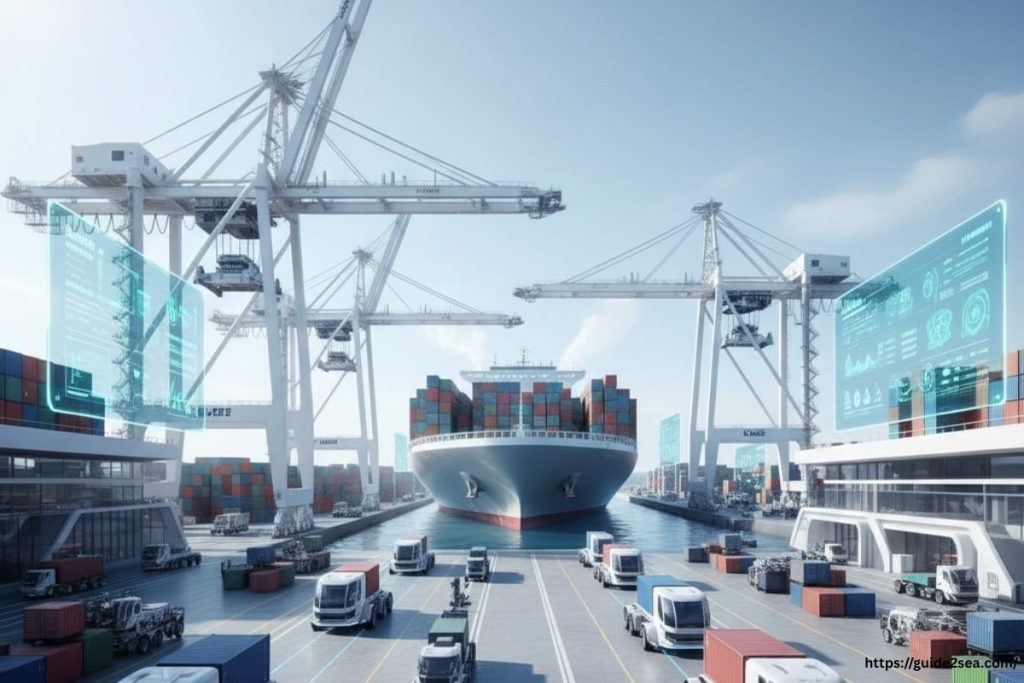
- Smart Containers: New containers are equipped with IoT sensors to track temperature, location, and humidity in real time. This helps operators to get alerts about delays, tampering, or temperature changes, helping ensure cargo integrity.
- Automated Ports: Ports are becoming more advanced. Automated cranes, self-driving trucks, and AI-based systems are replacing manual work. Ports like Rotterdam and Singapore are leading the charge with fully automated terminals that reduce human error and improve safety.
- Blockchain Technology: Blockchain helps digitize shipping documents and improve transparency. It reduces paperwork, prevents fraud, and allows every stakeholder to verify shipment data easily.
- Greener Shipping: The industry is investing in cleaner fuels such as LNG, hydrogen, and ammonia. Shipping lines are experimenting with hybrid vessels, wind-assisted propulsion, and electric cranes to cut emissions. Sustainable port operations will soon become the global standard.
- Flexible Logistics: With the growth of e-commerce and unpredictable demand, logistics is becoming more flexible. Modular container designs allow easier customization for specific cargo types. Short-sea and regional shipping are also expanding to meet local delivery needs.
Final Thought
From Malcolm McLean’s first container ship to today’s massive automated ports, containerization has come a long way.
It reshaped ships and ports, revolutionized inland transport, and enabled globalization. Despite challenges like port congestion, environmental impact, and technical reliance, innovations in containerization continue to move the industry forward.
The next generation of container shipping will be smart, green, and digital. With automation, AI, and sustainable fuels, the shipping industry is preparing for a cleaner and more efficient future.


Your point of view caught my eye and was very interesting. Thanks. I have a question for you.